
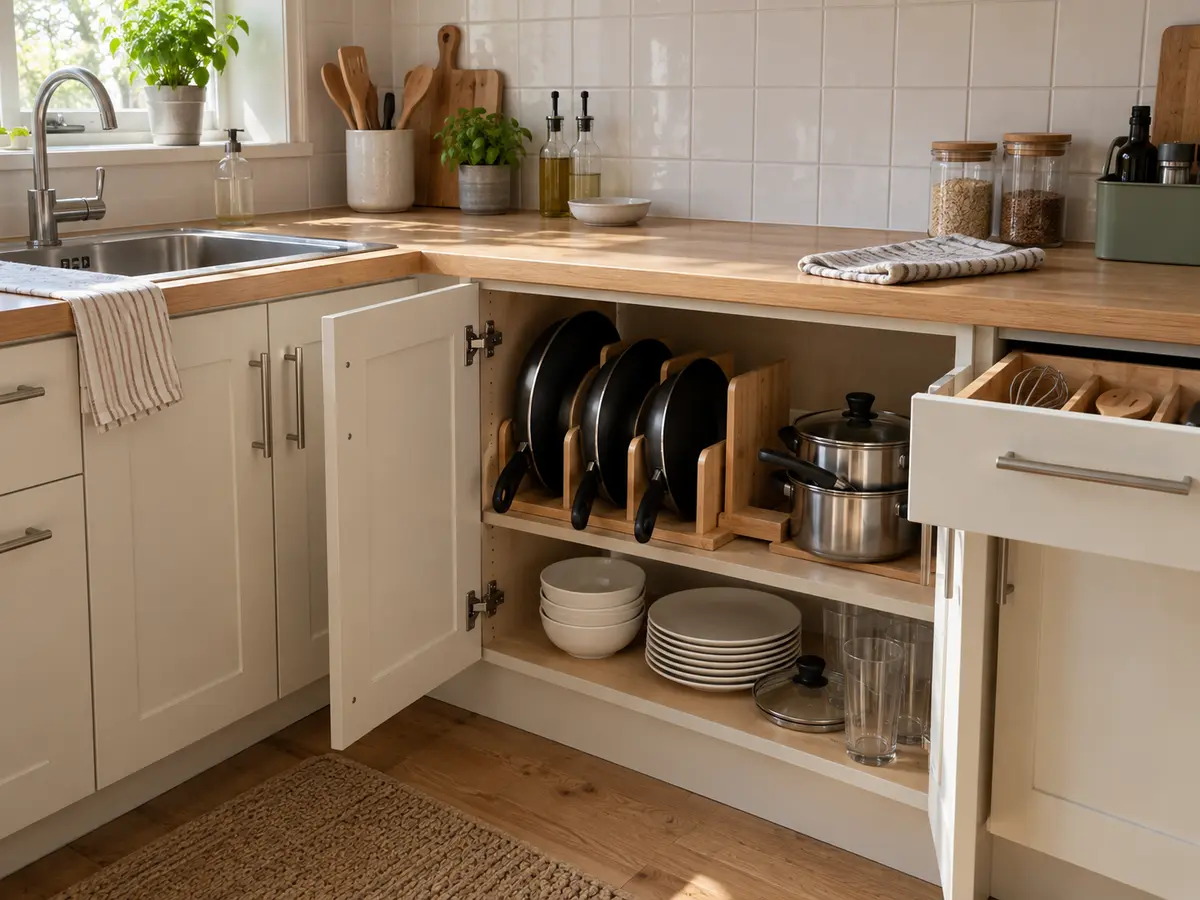
If opening one kitchen cabinet means moving three things before you can reach the one you need, the problem may not be the size of your kitchen. It is often the way the available space is being used.
The most useful kitchen organization ideas do more than make shelves look tidy. They make cooking easier, stop items from disappearing at the back and give frequently used things a sensible place.
You do not need to remodel the kitchen or buy an organizer for everything. Start with the cabinet or drawer that frustrates you most, then use the ideas below to fix one problem at a time.
Start With These Three Changes
- Move everyday items into the easiest-to-reach cabinets and drawers.
- Separate lids from pots, pans and food containers.
- Replace unstable piles with dividers, risers or handled bins.
1. Keep Everyday Items Within Easy Reach
Before buying containers or shelf organizers, look at where your everyday items are stored.
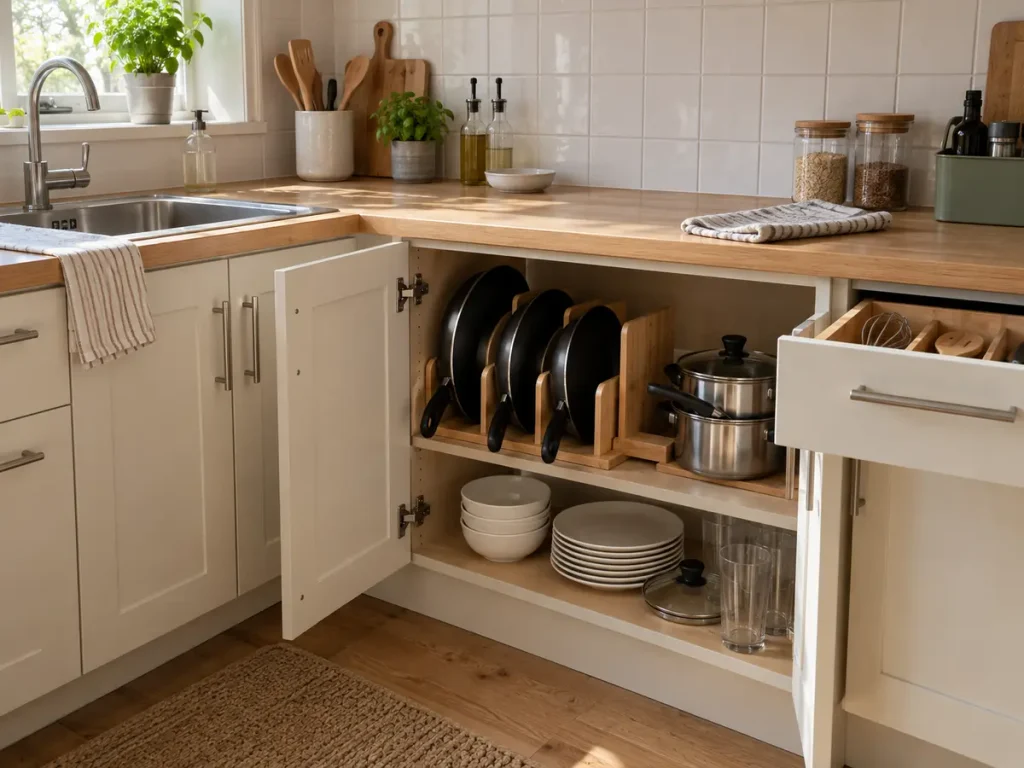
Plates, drinking glasses, frying pans and cooking tools should be close to the places where you use them. Items needed only occasionally—such as serving dishes, cake stands or large appliances—can move to higher shelves or less convenient cabinets.
This simple change prevents you from reaching over rarely used items every day. It also makes it easier for everyone in the house to return things to the correct place.
Try creating three basic zones:
- Daily-use zone: plates, glasses, pans and utensils
- Occasional-use zone: serving pieces and special cookware
- Backstock zone: unopened food and household refills
Quick Tip
Pay attention to your movements while making one meal. If you keep crossing the kitchen for basic tools, those items are probably stored in the wrong place.
2. Store Frying Pans Vertically
Frying pans are awkward to stack because handles point in different directions. The pan you want is usually at the bottom, which means lifting the entire pile to reach it.
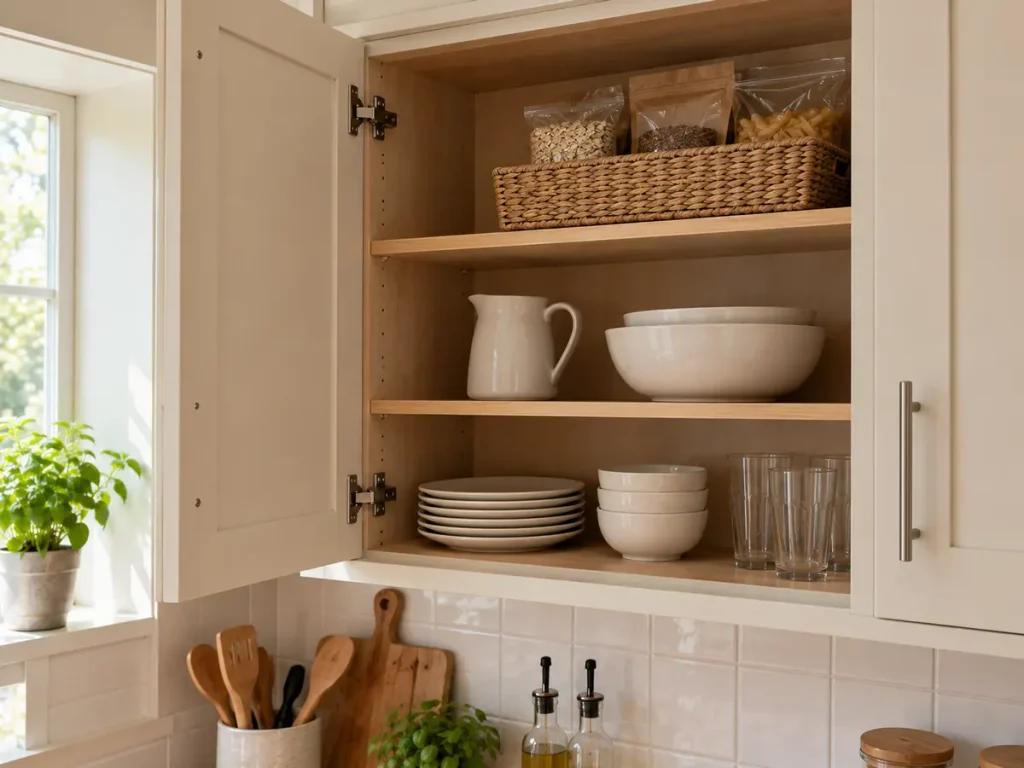
An adjustable rack can hold frying pans vertically, making each one visible and easy to remove. Place the pans you use most often at the front and heavier or less-used pans toward the back.
Vertical storage works best for frying pans, shallow skillets and pan lids. Deep saucepans and stockpots usually use space more efficiently when they are nested by size.
Avoid This Mistake
Do not force heavy cast-iron pans into a lightweight wire organizer. Use a strong fixed divider, or store very heavy pans flat on a low shelf.
3. Give Pot Lids Their Own Narrow Space
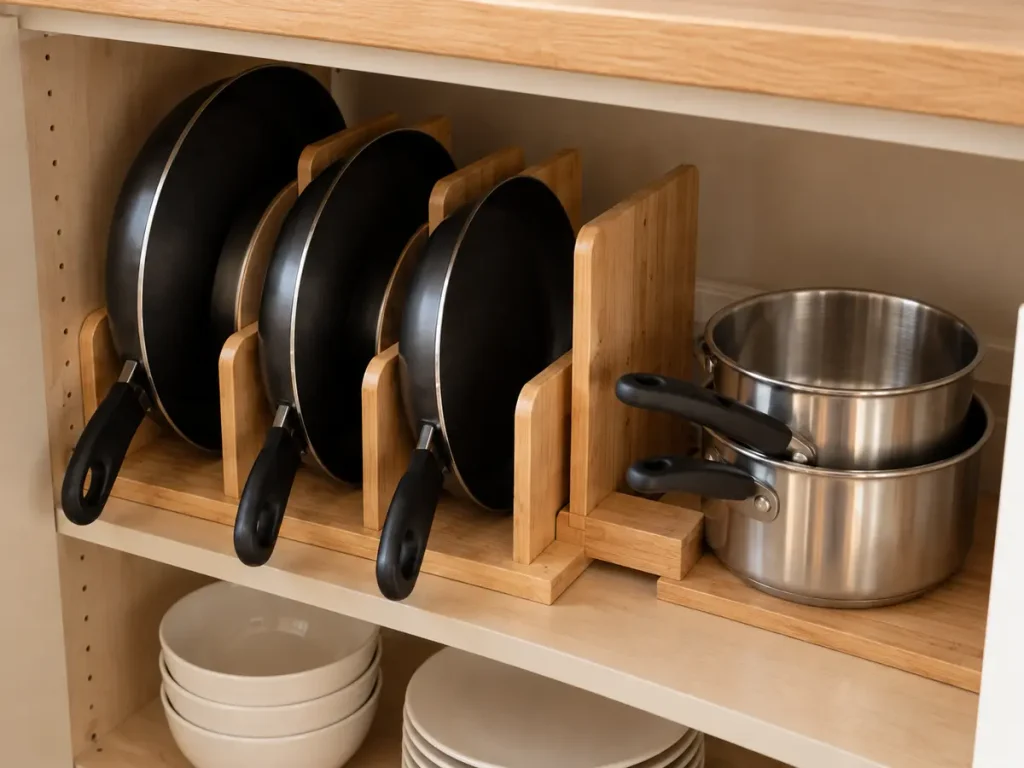
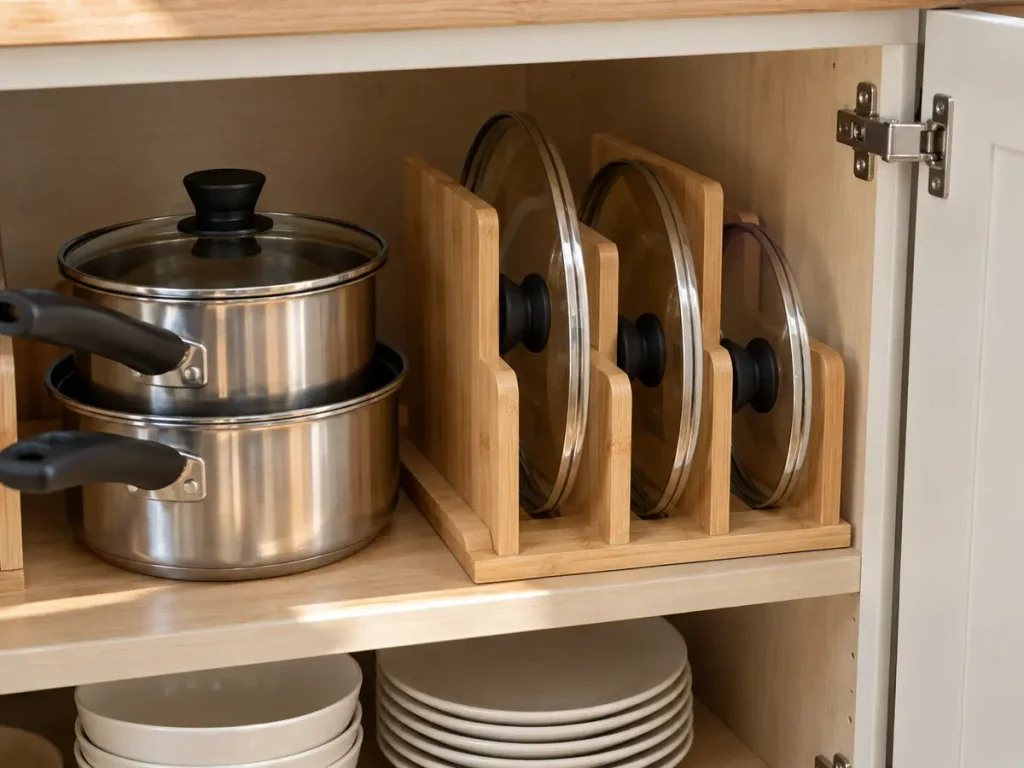
Pot lids cause clutter because their handles prevent pans from nesting properly. Keeping lids in their own narrow section makes better use of cabinet width and stops them from sliding around.
Use a vertical divider, a sturdy lid rack or a shallow drawer if one is available. Arrange lids roughly by diameter so you can find the correct one without testing several.
If cabinet space is extremely limited, keep only the lids that match cookware you still use. A lid without a matching pot is not spare storage—it is clutter.
Small-Space Option
A narrow lid rack beside nested pots usually uses less space than attaching a bulky organizer to the cabinet door.
4. Organize Food Containers by Shape
Food-storage containers become unmanageable when round, square and rectangular pieces are mixed in one stack.
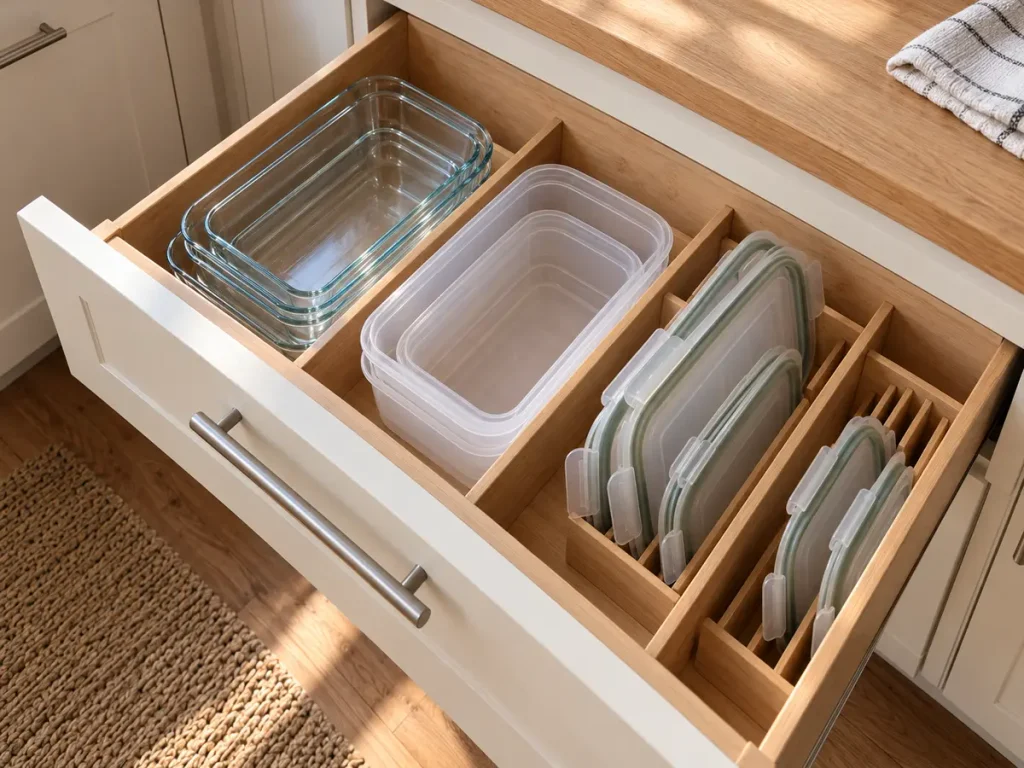
Group containers by shape first, then nest only matching shapes together. Store lids vertically in one divider so their edges remain visible. Small lids can go in a separate narrow container instead of disappearing underneath larger ones.
Do not keep every takeaway tub that enters the kitchen. Choose a reasonable number that fits the space you actually have.
A simple arrangement might include:
- Glass containers in one section
- Plastic containers in another
- Large lids standing vertically
- Small lids in a narrow basket
The Five-Minute Test
Match every container with its lid. Recycle or remove damaged pieces and anything without a partner. The drawer will immediately become easier to use.
5. Use Shelf Risers to Stop Wasting Height
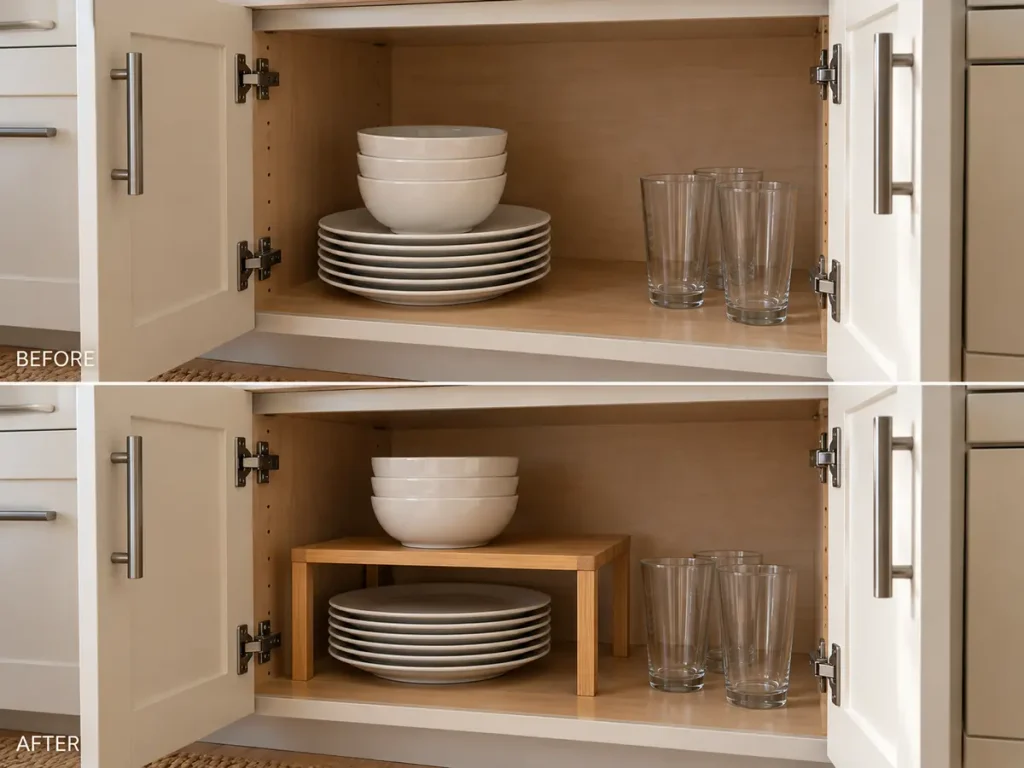
Many kitchen cabinets have plenty of height but only one shelf. That often leads to bowls sitting on top of plates or mugs being balanced in two unstable rows.
A shelf riser creates a second usable level without permanently changing the cabinet. Use one for items that naturally form clear groups, such as plates and bowls, short glasses, mugs or canned food.
Shelf risers are less helpful in a cabinet filled with objects of completely different heights. Measure the space first and decide exactly what will sit above and below the riser.
Measure Before Buying
Measure the cabinet’s internal width, depth and usable height. The outside door measurement will not tell you whether an organizer actually fits inside.
6. Make Deep Lower Cabinets Easier to Reach
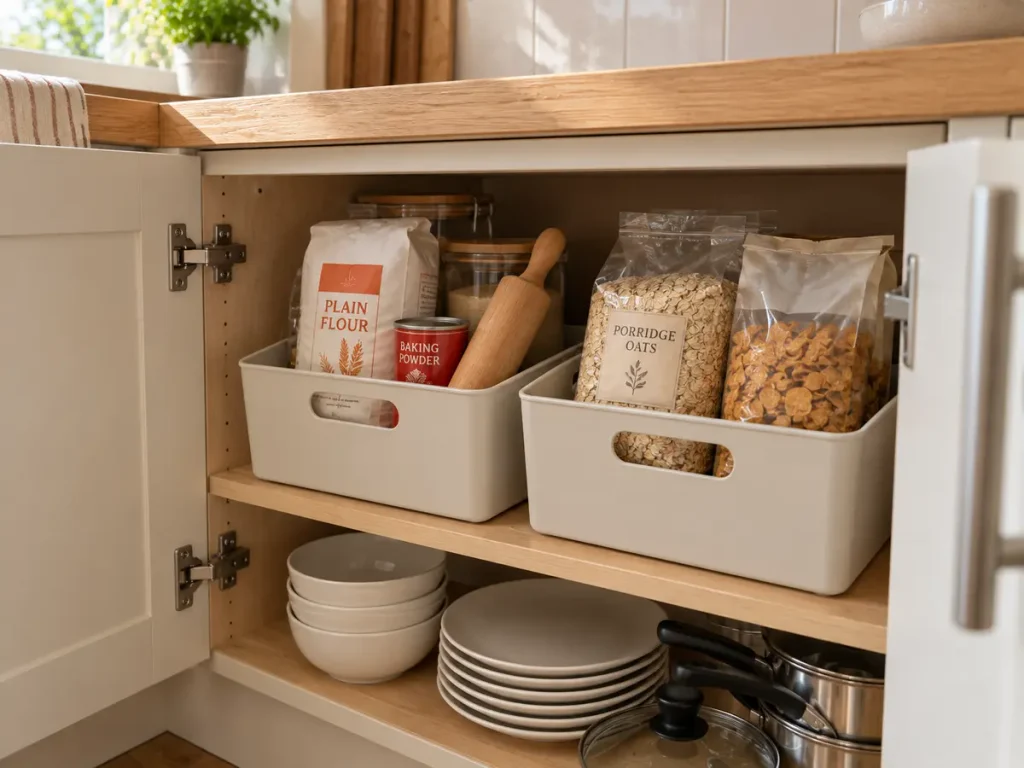
Deep cabinets offer plenty of storage, but smaller items often disappear behind larger ones. The answer is not necessarily an expensive built-in pull-out system.
Handled bins can turn the contents into simple categories. Pull out the whole bin, take what you need and return it without disturbing everything around it.
Useful categories include:
- Baking supplies
- Breakfast ingredients
- Small-appliance attachments
- Cleaning-product refills
Avoid filling one bin with unrelated objects just because they fit. A category should make sense when you are standing in the kitchen looking for something.
Best Use of Deep Space
Place taller or less-used products at the back, but keep them inside a removable bin. Loose items at the back are the ones most likely to be forgotten.
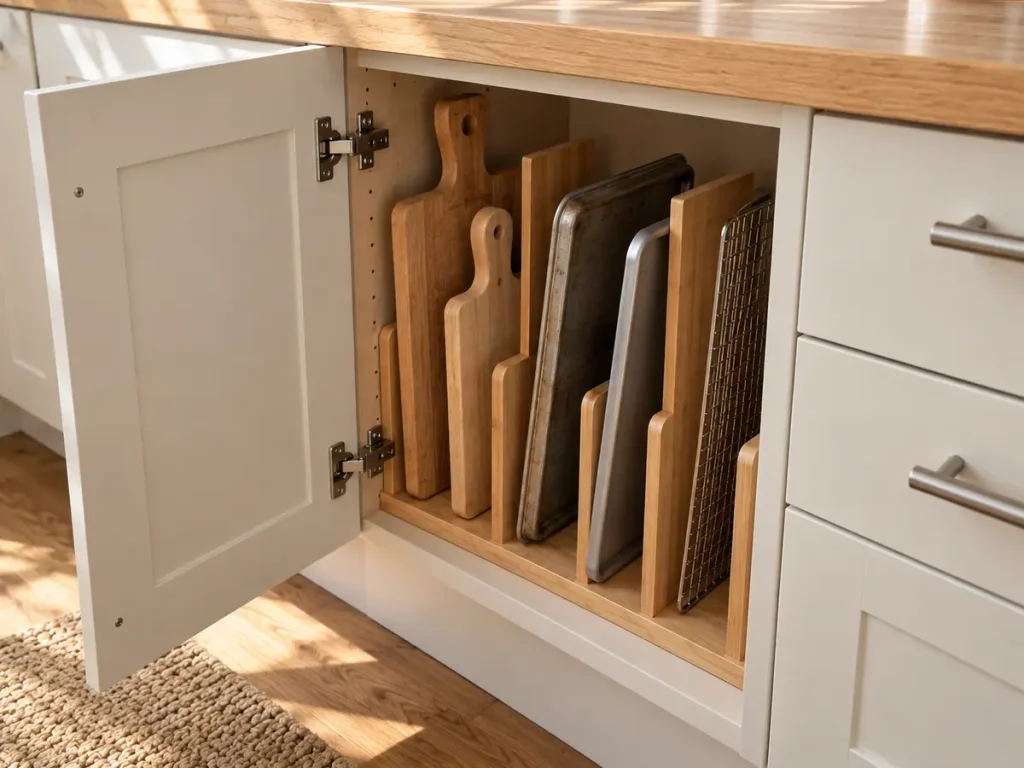
7. Store Trays and Cutting Boards Upright
Baking trays, chopping boards, cooling racks and muffin tins are difficult to lift from a horizontal stack. Vertical dividers let you slide out one item without moving the rest.
Choose a cabinet close to the food-preparation area or oven. Keep frequently used cutting boards together and give large baking sheets a separate slot.
The dividers should be close enough to support each item. If the spaces are too wide, thin trays will lean and the section will turn into another untidy pile.
Placement Tip
Store heavy wooden boards in a low cabinet. They are safer to lift from below waist height than from an upper shelf.
8. Organize Under the Sink Around the Plumbing
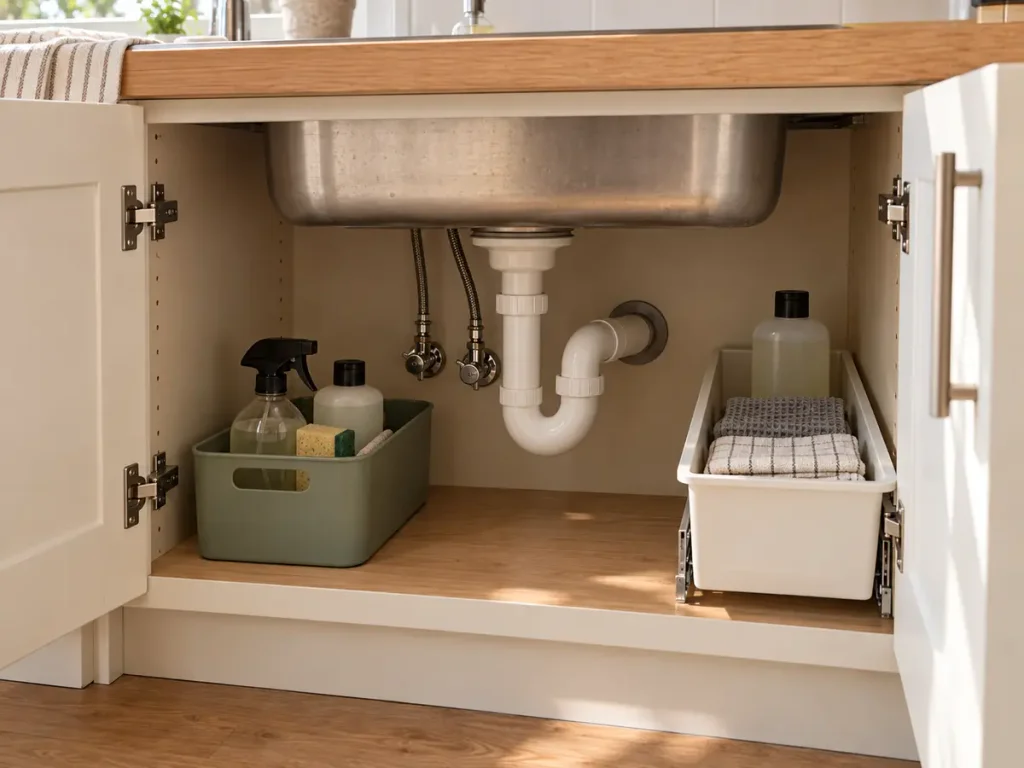
The cabinet under the sink is not an empty rectangle. Pipes, the sink bowl and the possibility of leaks all affect what can safely be stored there.
Start by placing one portable caddy near the front for products used during regular cleaning. Use a narrow pull-out bin for spare sponges, dishwasher tablets or sealed refills. Keep the area directly beneath pipe connections visible so a small leak is easier to notice.
Cabinet-door storage can work for light items such as cloths or a small roll of trash bags, but check that it clears the pipes and internal shelves when the door closes.
Safety Note
Do not store food, open products, medicines or anything easily damaged by moisture under the kitchen sink.
9. Separate Open Pantry Items From Backstock
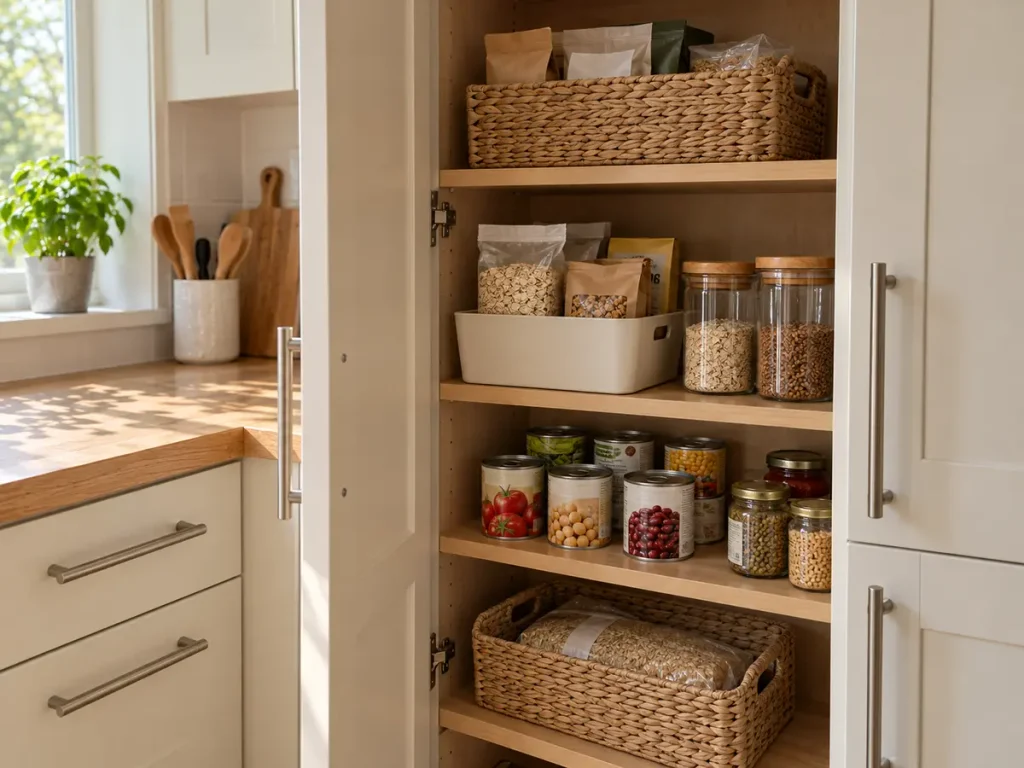
Buying larger packs can save money, but only when the extra products have a defined place. Otherwise, backstock spreads across several cabinets and you buy more because you cannot see what you already own.
Keep open products in the easiest-to-reach pantry zone. Store unopened replacements together on a higher or lower shelf. Before adding an item to the shopping list, check the backstock area.
Clear containers can be useful for foods you buy regularly, but you do not need to decant everything. Pouring half a packet into a container and storing the leftover packet somewhere else creates more clutter, not less.
A Better Pantry Rule
Decant only foods that you use frequently and can fit completely into the chosen container. Keep everything else in its original package inside a labelled basket.
10. Leave Enough Space to Put Things Back
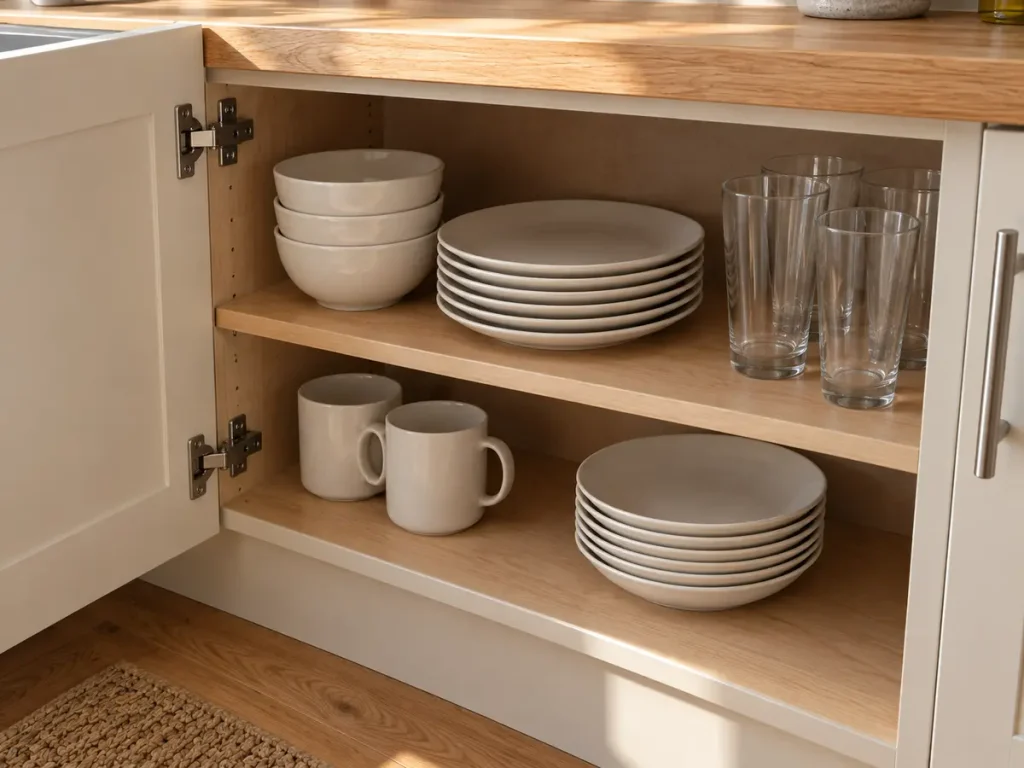
A cabinet packed to the edges may look efficient, but it will not stay organized. If returning one bowl requires rearranging an entire shelf, that system is too full.
Try to leave a little breathing room in each busy cabinet and drawer. You should be able to remove and return frequently used items without lifting several other things first.
Start by removing:
- Duplicate utensils you never choose
- Chipped or unused mugs
- Food containers without lids
- Expired pantry products
- Appliance attachments you no longer own
The goal is not to create an empty, picture-perfect kitchen. It is to keep the items you use in a space that works without a daily struggle.
The Rule That Keeps It Organized
When a completely full category gains a new item, remove or relocate one item that is no longer useful.
Start With the Space That Bothers You Most
You do not need to organize the entire kitchen in one day. Choose the cabinet or drawer that slows you down most often and fix that area first.
Once everyday items are easier to reach, lids have their own place and unstable stacks are removed, the kitchen will feel more spacious even though its actual size has not changed.
Make the system easy enough to maintain on a busy day. That matters more than having every shelf look perfect.

Leave a Reply