
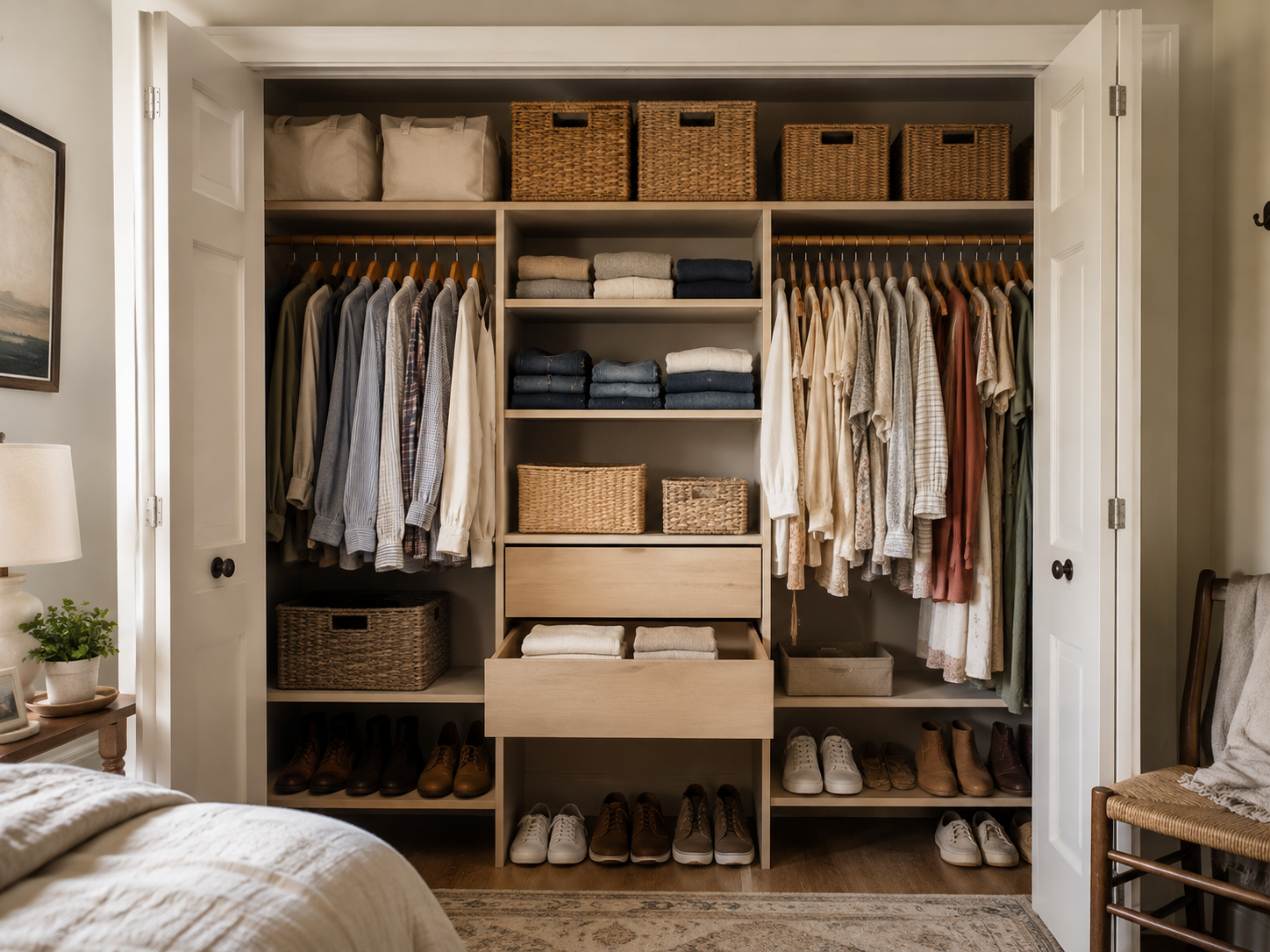
A closet becomes frustrating when it is full but still difficult to use. You may own plenty of storage, yet spend time searching for clothes, moving piles, or finding items you forgot you had.
A better closet is not about making it look perfect. It is about giving the clothes and accessories you actually use a clear, easy-to-reach place. These closet organization ideas will help you reduce visual clutter and make getting dressed simpler.
Begin by Removing What Does Not Belong
Before buying baskets, dividers, or new hangers, empty one section of the closet and look at what is inside.
1. Remove clothes that are no longer worn
Set aside clothing that no longer fits, is damaged beyond repair, or has not been worn for a long time. Keep only items you realistically reach for.
You do not need to make every decision at once. Start with one category, such as shirts or jeans. Small decisions are easier than trying to organize the entire closet in one afternoon.
2. Move non-clothing items elsewhere
Closets often become storage rooms for boxes, old bags, random paperwork, and items that do not belong there. Remove anything that has a better home in another part of the house.
This creates more room for the things the closet is actually meant to store.
Create Simple Clothing Categories
A closet works best when similar items are kept together.
3. Group clothes by type first
Keep shirts with shirts, trousers with trousers, dresses with dresses, and sweaters with sweaters. This makes it much faster to find what you need in the morning.
After grouping by type, you can arrange each section by colour if that helps you. Colour order looks neat, but clothing type should come first because it is more practical.
4. Keep everyday clothes at eye level
Store the clothes you wear most often in the easiest-to-reach area. Seasonal items, special-occasion outfits, and spare bedding can go on the upper shelf or in lower storage boxes.
This prevents you from having to move other items every time you get dressed.
Make Better Use of Hanging Space
Many closets have more hanging space than people realize.
5. Use slim matching hangers
Bulky plastic or wooden hangers take up room quickly. Slim hangers allow more clothes to fit on the rail while keeping everything at a similar height.
Matching hangers are not essential, but they make the closet easier to scan because the clothes, not the hangers, become the focus.
6. Add a second hanging rail
If your closet has a tall section used only for shirts and trousers, consider adding a second rail beneath the first one. Shorter clothes do not need the full height of the closet.
Use the upper rail for shirts, jackets, or blouses and the lower rail for trousers, skirts, or folded items on hangers. Leave a tall section for dresses or longer coats.
Improve Shelf Storage
Shelves can become messy when clothes are stacked too high or have no boundaries.
7. Use shelf dividers
Shelf dividers keep piles of sweaters, jeans, and handbags from falling into each other. They are especially useful on deep shelves where items at the back become hidden.
Avoid stacking clothing too high. A smaller, neat stack is easier to maintain than one large pile that collapses every time you remove something.
8. Store folded clothes in labelled baskets
Use baskets or fabric bins for items that do not need to hang, such as scarves, workout clothing, swimsuits, or extra T-shirts.
Labels are useful when bins are placed on a high shelf. You should be able to know what is inside without pulling each one down.
Use Doors and Empty Vertical Areas
The back of a door and the inside walls of a closet can add storage without using any floor space.
9. Add a door organizer
An over-the-door organizer can hold shoes, accessories, hair tools, scarves, or small bags. Clear pockets work well for items you want to see quickly.
Make sure the organizer is not too thick for the door to close comfortably.
10. Use hooks for bags and belts
A few hooks can stop handbags, belts, hats, or robes from ending up on a chair or floor. Use sturdy hooks for heavier bags and smaller hooks for lightweight accessories.
Keep only a few frequently used items on display. Too many hooks can make the closet look crowded again.
Organize Shoes and Accessories Separately
Shoes and accessories are often the first areas to become disorganized because they are small and easy to drop anywhere.
11. Give shoes a fixed home
Use a low shoe rack, clear boxes, or a hanging organizer. Keep everyday shoes near the bottom where they are easy to grab.
Store seasonal shoes higher up or in labelled boxes. If you use boxes, add a small photo or label on the front so you can identify each pair easily.
12. Keep accessories in small sections
Use drawer dividers, shallow trays, or small containers for jewellery, watches, belts, sunglasses, and other small items. Each category should have one clear place.
This also makes it easier to notice duplicates before buying something you already own.
Make It Easy to Maintain
An organized closet will not stay organized if the system is difficult to use.
Leave a small amount of empty space on the rail and shelves. When every area is packed tightly, putting things away becomes annoying and clutter returns quickly.
Once a week, spend a few minutes putting clothes back in their right category. Keep a laundry basket nearby so worn clothes do not end up on the floor or over a chair.
A closet does not need to look like a showroom. It needs to help you find what you own and make your everyday routine easier.
Final Thoughts
Start with one shelf, one rail, or one clothing category. Remove what you do not use, group what remains, and give every item a regular place.
Simple changes such as slim hangers, shelf dividers, labelled bins, and a second hanging rail can make a closet feel far more useful. The result is less searching, less visual clutter, and an easier start to each day.

Leave a Reply